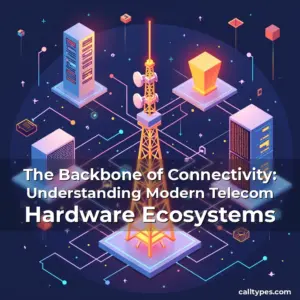
The Evolution and Impact of Telecom Hardware in Modern Connectivity
In an era defined by seamless global communication, telecom hardware forms the backbone of our digital lives. From cellular networks to fiber-optic cables, these physical components enable everything from streaming high-definition videos to conducting virtual meetings across continents.
This exploration delves into the intricate world of telecom hardware, uncovering its technological advancements, critical applications, and future trajectories that continue to reshape how we connect and interact globally.
The Foundations of Telecom Hardware
At the heart of modern telecommunications lies a complex ecosystem of hardware devices designed to transmit data over vast distances efficiently. These systems rely on both wired and wireless technologies to ensure reliable connectivity worldwide.
Routers serve as pivotal nodes within this network infrastructure, directing data packets between different networks while maintaining optimal performance levels through advanced routing algorithms and Quality of Service protocols.
- Broadband Modems: Devices that convert signals from internet service providers into usable formats for home or office use
- Antennas: Essential components in wireless communication that capture and relay radio frequency signals across various spectrums
Switches play an equally crucial role by facilitating direct connections among local network devices such as computers, printers, and other peripherals without needing to traverse entire internetworks each time.
Advancements in Wireless Communication Technology
The transition from 4G LTE to 5G technology marks a significant leap forward in terms of speed, latency reduction, and overall network capacity. This shift has enabled new applications ranging from autonomous vehicles to remote surgical procedures performed via telepresence robots.
Critical factors driving this transformation include millimeter-wave spectrum utilization which allows higher bandwidth transmission rates compared to traditional microwave bands used previously.
Massive Multiple Input Multiple Output (MIMO) antenna arrays are now standard features in next-generation base stations, significantly increasing spectral efficiency and reducing interference issues inherent in densely populated urban areas.
Beamforming techniques have also gained prominence due to their ability to dynamically adjust signal directionality towards individual users rather than broadcasting omnidirectionally as was common before.
Fiber Optics and High-Speed Data Transmission
Fiber optic cables represent one of the most transformative innovations in long-distance communications, utilizing light pulses instead of electrical currents for transmitting information at near-light speeds.
These optical fibers consist primarily of glass or plastic strands coated with protective layers to prevent damage during installation processes involving extreme temperatures or mechanical stress conditions.
The advantages offered by fiber optics extend beyond mere speed improvements; they provide enhanced security against eavesdropping attempts since light signals cannot be intercepted easily using conventional methods employed against copper wire transmissions.
Network operators continue investing heavily in expanding fiber-to-the-home deployments worldwide as part of broader efforts aimed at achieving universal broadband access goals set forth by international organizations such as ITU-T.
Data Centers and Their Role in Telecommunications Infrastructure
Data centers act as centralized repositories where massive volumes of digital content get stored securely under controlled environmental conditions suitable for electronic equipment longevity.
They house servers responsible for hosting websites, cloud computing platforms, and enterprise-level databases alongside storage solutions optimized for rapid retrieval operations required by real-time applications.
Modern data center designs incorporate modular architectures allowing flexible scaling capabilities according to fluctuating demand patterns observed throughout peak hours versus off-peak periods.
Energy efficiency remains paramount concern given rising electricity costs associated with cooling mechanisms necessary to maintain ideal operating temperatures inside server rooms housing thousands upon thousands of processing units simultaneously.
To address sustainability challenges posed by excessive power consumption figures linked with current generation facilities, many industry leaders are adopting green initiatives focusing on renewable energy sources integration along with implementing AI-driven predictive maintenance strategies.
The Internet of Things (IoT): Bridging Physical World With Digital Networks
The proliferation of IoT devices creates unprecedented opportunities yet poses considerable challenges regarding network scalability requirements necessitating robust telecom infrastructures capable of handling exponentially growing traffic loads.
Sensors embedded within everyday objects generate continuous streams of data requiring efficient aggregation mechanisms prior to transmission across existing carrier-grade networks already strained under normal operational scenarios.
Edge computing emerges as promising solution addressing latency concerns associated with sending raw sensor readings directly back to central cloud locations potentially miles away resulting in noticeable delays affecting application responsiveness critically dependent on timely response times.
By deploying microdatacenters closer proximity to source endpoints generating voluminous amounts of unstructured data, edge computing reduces round trip travel durations thereby enhancing overall system performance metrics measured against established benchmarks.
However implementation hurdles persist including increased capital expenditures tied up front investments needed establishing distributed processing environments spanning geographically dispersed regions covering extensive territories inhabited by diverse populations differing greatly concerning technical proficiency levels.
Satellite Communications: Expanding Reach Beyond Terrestrial Boundaries
While terrestrial-based telecom solutions dominate majority share currently held within market segment, satellite communications offer viable alternative particularly beneficial for reaching remote rural communities lacking adequate ground infrastructure coverage.
Leveraging orbiting satellites positioned strategically above Earth’s surface enables transmission pathways unaffected by geographic constraints limiting reachability otherwise imposed by topographical obstacles preventing line-of-sight visibility essential successful establishment stable links.
Recent advances incorporating low-earth-orbit constellations composed numerous small satellites working collaboratively enhance reliability aspects typically plagued earlier generations relying single-point failure prone architectures susceptible outages caused malfunction any singular component constituting vital part larger framework.
Companies leading space sector developments actively pursuing ambitious projects aiming achieve global internet accessibility objectives through deployment megaconstellations comprising hundreds thousands artificial satellites designed operate harmoniously together ensuring uninterrupted service delivery regardless location user resides.
Security Considerations Within Telecom Hardware Ecosystems
As reliance continues intensifying upon interconnected systems formed through convergence heterogeneous technologies originating disparate vendors manufacturing components subjected varying degrees scrutiny regarding cybersecurity standards compliance adherence certifications mandated regulatory bodies overseeing industry practices nationwide jurisdictions internationally.
Vulnerabilities may manifest unexpectedly through supply chain compromises occurring anywhere along production pipeline stretching initial design phase right until final assembly stage ready shipment distribution channels catering end consumers businesses alike expecting secure products functioning reliably indefinitely without compromise integrity confidentiality availability principles fundamental tenets information assurance discipline.
Hardware Trojans pose especially insidious threat infiltrating legitimate circuits posing challenge detection demanding sophisticated testing methodologies employing invasive inspection techniques potentially damaging delicate structures rendered useless once compromised.
Encryption plays vital role safeguarding sensitive transactions traversing public switched telephone networks transitioning toward fully digitized counterparts utilizing quantum-resistant ciphers anticipated becoming mainstream adoption subsequent breakthroughs emerging field post-quantum cryptography research labs experimenting novel mathematical constructs resistant decryption attempts executed powerful supercomputers equipped specialized processors developed exclusively purpose defeating conventional encryption schemes currently protecting classified government documents military assets commercial secrets corporations guarding proprietary formulas trade secrets.
Future Trends Shaping Next Generation Telecom Hardware
Ongoing research pursuits concentrated around development photonic integrated circuits promise revolutionize communication paradigms altogether eliminating necessity electrically powered transistors traditionally forming basis silicon chip fabrication processes prevalent today.
Quantum communication represents another frontier holding potential redefine cryptographic protocols fundamentally altering nature trust verification authentication mechanisms relied upon securing digital identities verifying legitimacy credentials exchanged securely over open networks exposed malicious actors seeking exploit weaknesses vulnerabilities present even well-implemented security frameworks.
Artificial intelligence integration promises elevate automation levels managing complex tasks formerly handled manually requiring human intervention prompting reevaluation workforce composition roles responsibilities evolving landscape demands heightened expertise skills sets aligning emerging job markets created disruption brought forth disruptive innovations challenging status quo.
Collaborative efforts among stakeholders spanning academic institutions governmental agencies private enterprises remain crucial ensuring equitable dissemination benefits derived cutting-edge discoveries accessible everyone irrespective socioeconomic backgrounds geographical locations cultural contexts influencing receptivity acceptance novelty introduced society.
Conclusion
The relentless pace of innovation in telecom hardware underscores its indispensable role in sustaining the ever-expanding digital universe. As new technologies emerge, they not only enhance existing capabilities but also pave the way for entirely new applications and services.
For individuals and organizations looking to stay ahead, understanding the dynamics of telecom hardware is essential. Whether you’re developing new products, optimizing your network infrastructure, or simply curious about the invisible forces behind your daily connectivity, staying informed will empower you to make better decisions in an increasingly connected world.

news is a contributor at CallTypes. We are committed to providing well-researched, accurate, and valuable content to our readers.